 EN
EN


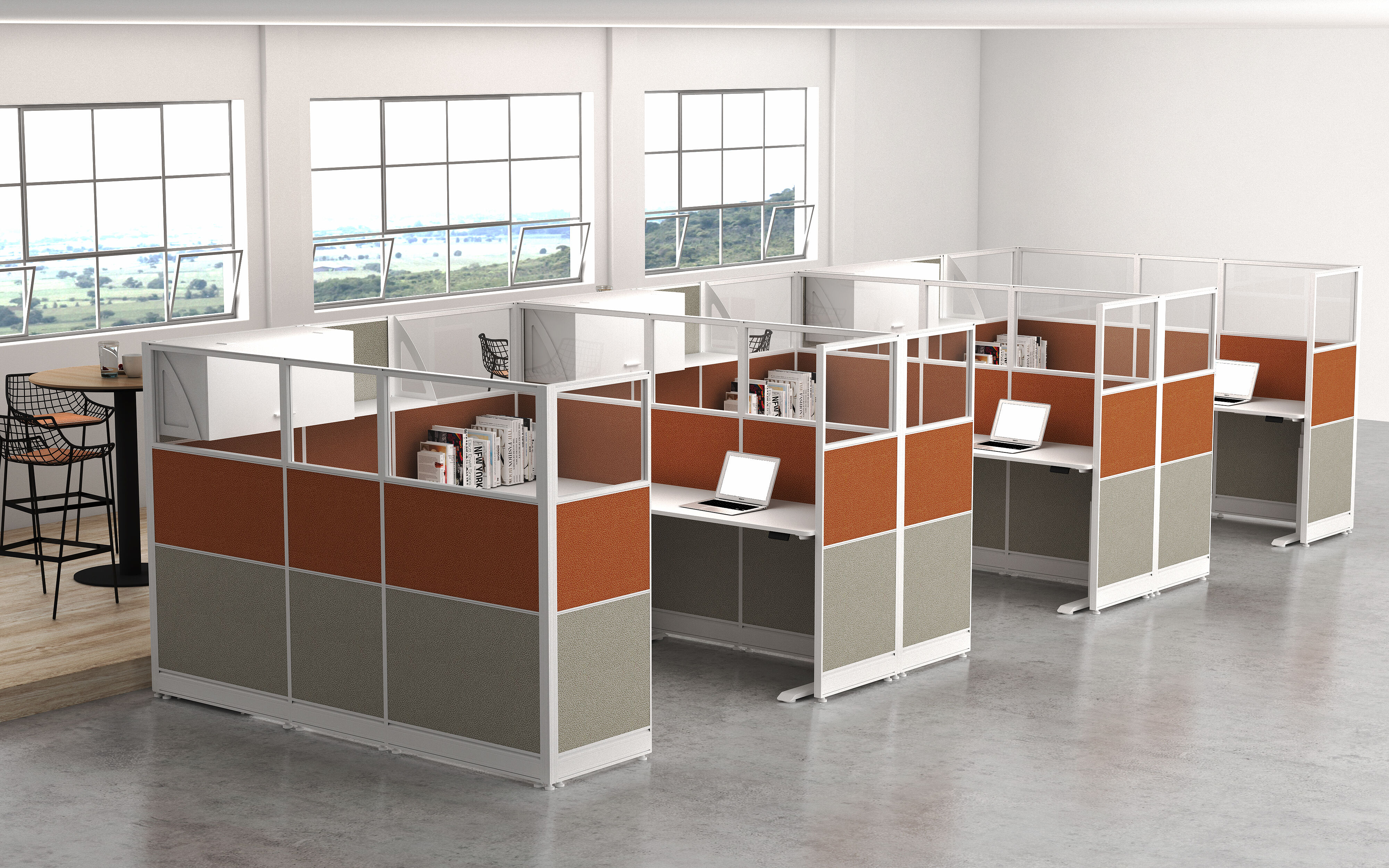
Why Modular Furniture Solutions Are Essential for Modern Space Strategy
Rigid office layouts struggle to accommodate today's dynamic workforce. Hybrid models now dominate 74% of organizations (Gartner, 2025), requiring spaces that toggle between collaborative hubs and private zones daily. Modular furniture solutions solve this through inherent adaptability—components reconfigure in minutes without technical expertise. Mobile workstations with nesting capabilities achieve 30% higher space utilization than fixed equivalents, while convertible storage units serve as room partitions during team expansions. This agility directly impacts financial performance: companies avoid costly renovations when departments scale or relocate. Unlike conventional alternatives, modular systems extend asset lifespans through partial upgrades instead of complete replacements. As commercial real estate costs climb 7% annually (JLL, 2026), maximizing square-foot efficiency transforms from luxury to operational imperative. Organizations leveraging these systems gain strategic resilience—their spaces evolve at the pace of market change rather than constraining it.
Modular Furniture Solutions for Adaptive Space Optimization
From static to responsive: How modular systems enable real-time layout reconfiguration
Modular furniture solutions transform fixed environments into dynamic spaces through components with interchangeable connectors and mobile bases. These systems allow facility managers to convert lecture halls into collaborative zones within minutes using standardized units. Key mechanisms include slide-and-lock joints for quick assembly and casters with directional locking for fluid movement. Cognitive ergonomics research shows reconfigurable settings reduce adjustment fatigue by 23% when transitioning between activities. The infrastructure supports on-demand modification without structural changes to buildings, turning previously underutilized corners into functional work pods. Organizations report 40% faster space adaptation cycles compared to fixed layouts, enabling agile responses to evolving operational needs.
Case study: 37% increase in functional space utilization across hybrid-learning campuses
A multi-campus implementation demonstrated how modular furniture solutions maximize functional density. Institutions replaced traditional seating with reconfigurable units featuring foldable work surfaces and nesting capabilities. During peak hours, lecture configurations accommodate 120% seating capacity through smart vertical stacking. Off-peak transformations create collaborative hubs with mobile whiteboards and writable surfaces. Performance metrics tracked over 18 months showed a 37% increase in daily utilization rates and 29% higher student occupancy during non-peak hours. Space analytics revealed the compound benefits: each modular unit served 4.2 distinct functions weekly versus 1.8 for traditional setups. Flexible zoning reduced the need for dedicated single-purpose rooms, freeing capital for other academic priorities.
Human-Centered Design in Modular Furniture Solutions
Ergonomic intelligence: Supporting posture, movement, and cognitive engagement
Modular furniture solutions prioritize human physiology through adjustable components that actively support spinal alignment and reduce musculoskeletal strain by 34% compared to static designs. These systems incorporate dynamic elements like height-variable work surfaces and tilt-responsive seating that adapt to natural body movements, preventing sedentary fatigue. Strategic contouring enhances blood flow while maintaining neutral postures during extended tasks, directly boosting cognitive endurance. Studies show such ergonomic interventions improve task focus by 27% and reduce discomfort-related interruptions in knowledge work environments.
Seamless tech integration: IoT-enabled monitoring and adaptive reconfiguration
Embedded sensors in modular furniture solutions continuously collect usage patterns, triggering automatic adjustments to lighting, surface height, and spatial configurations through machine learning algorithms. This IoT framework enables real-time adaptation to individual preferences while optimizing communal space utilization. For example, occupancy sensors reconfigure meeting pods based on group size, and posture-monitoring cushions suggest micro-breaks when detecting prolonged static positions. Such responsive environments demonstrate 41% faster reconfiguration than manual alternatives while reducing energy consumption through targeted climate control.
Sustainability and ROI: The Long-Term Value of Modular Furniture Solutions
Total cost of ownership: 42% lower over 7 years vs. traditional furniture
Independent analysis by McKinsey (2025) reveals modular furniture solutions deliver 42% lower total cost of ownership across seven years compared to conventional counterparts. This stems from configurable components extending functional lifespans and eliminating wholesale replacements during layout changes—a key driver in reducing recurring capital expenditure.
Circular lifecycle: Reuse, refurbishment, and carbon footprint reduction
These solutions enable circular resource flows where components are refurbished or repurposed across multiple lifecycles. Material efficiency during manufacturing—combined with component-level replacement protocols—cuts virgin material consumption by up to 60% while reducing associated carbon emissions, aligning economic and environmental sustainability goals.
FAQ
What is modular furniture?
Modular furniture consists of adaptable components that can be rearranged, expanded, or reconfigured to serve different functions and spaces.
Why is modular furniture important for modern spaces?
It provides flexibility, efficient space utilization, and adaptability to meet the demands of hybrid workforce models and changing organizational needs.
How does modular furniture improve sustainability?
It reduces waste through reusable and reconfigurable components, lowers material consumption, and minimizes the carbon footprint during its lifecycle.
What are the financial benefits of modular furniture?
Organizations experience lower total costs of ownership, avoid costly renovations, and benefit from extended product lifespans with modular setups.
Can modular furniture integrate with technology?
Yes, IoT-enabled sensors in modular furniture allow for automated adjustments to lighting, heights, and layouts based on real-time usage data.