 EN
EN


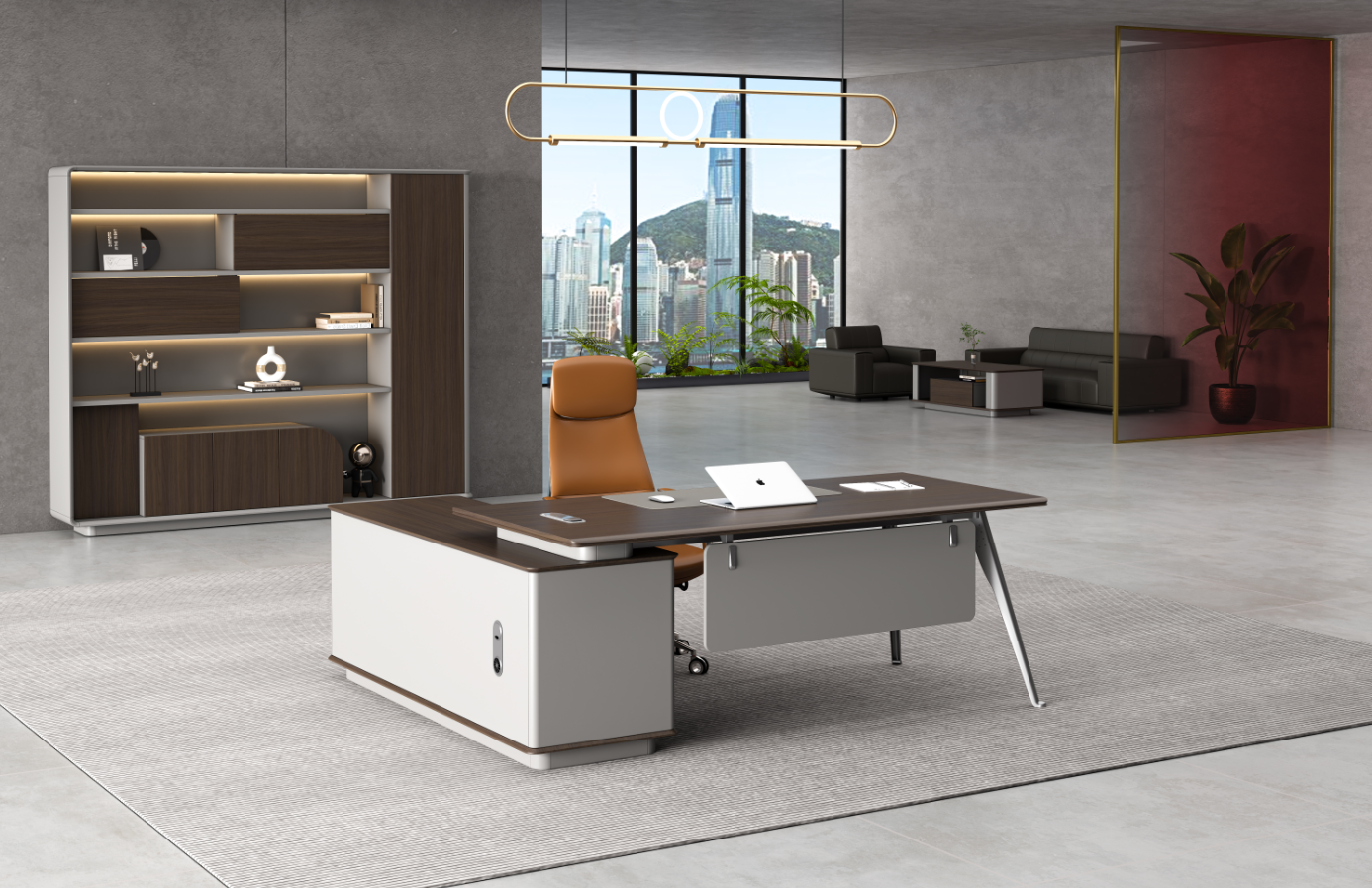
Ergonomic Precision: Why Custom Office Desk Dimensions Reduce Fatigue and Sustain Focus
Optimal height, depth, and monitor alignment for neutral posture and reduced cognitive load
A custom office desk calibrated to individual anthropometrics eliminates compensatory body movements that trigger musculoskeletal fatigue. Precise height alignment ensures forearms rest parallel to the floor—maintaining elbow angles between 70° and 135°—which reduces trapezius activation by 19%, per ergonomic assessments. Depth customization positions the monitor at the ideal 20–40 inch viewing distance to sustain ocular focus, while supporting elbows at ~90° minimizes ulnar nerve compression. This biomechanical precision redirects energy from pain management to task execution, lowering cognitive load and reducing error rates by 15% in data-entry roles.
Evidence from workplace EMG and motion-capture studies: How personalized fit prevents micro-fatigue accumulation
Electromyographic (EMG) analysis reveals workers using generic desks exhibit 42% higher cervical muscle activation than those with tailored workstations. Motion-capture studies show hip flexion exceeding 15°—common with non-adjustable desks—triggers compensatory lumbar strain, accumulating micro-fatigue that reduces afternoon productivity by 27%. A three-year workplace trial confirmed personalized desks decrease micro-break frequency by 36%, sustaining neutral spine alignment and preventing cortisol spikes linked to postural discomfort—directly preserving concentration during complex tasks.
Dynamic Movement Support: How Adjustable Custom Office Desks Enhance Cognitive Performance
Sit-stand cycling and task accuracy: Meta-analysis insights on sustained attention and error reduction
Alternating between sitting and standing with a custom height-adjustable desk sustains mental performance. A meta-analysis of 12 workplace trials found users who transitioned every 30 minutes committed 18% fewer errors in detail-oriented tasks than static seated workers. Neuroergonomic research shows attention typically declines after 90 continuous minutes of sitting; in contrast, employees using adjustable configurations maintained 98% baseline accuracy on standardized concentration tests throughout afternoon work blocks—significantly outperforming traditional desk users, whose accuracy dropped 27% by 3 PM.
Neurovascular benefits: Postural shifts as natural stimulants for prefrontal cortex engagement
Positional changes activate physiological mechanisms that sharpen cognition. Transitioning to standing increases blood flow velocity in the middle cerebral artery by 15.6% within five minutes, delivering more oxygen to executive function networks (Journal of Neurophysiology, 2023). Functional MRI scans show these micro-movements trigger prefrontal cortex activation comparable to light exercise, yielding 23% faster response times on decision-making tasks. Regular posture variation also lowers neck muscle EMG activity by 31%, reducing the neural effort required to maintain focus—naturally stimulating arousal systems without conscious effort to support deep work.
Psychological Ownership and Well-Being: The Productivity Impact of Personalized Desk Design
Biophilic materials, color control, and spatial autonomy—how customization lowers cortisol and elevates engagement
Integrating natural materials like wood or stone triggers biophilic responses, reducing cortisol levels by up to 15% (environmental psychology research). When employees control desk color schemes and spatial configurations, they experience heightened psychological ownership—a core driver of intrinsic motivation. This autonomy transforms workspaces from impersonal stations into curated environments that support creative flow. Neutral palettes improve focus by minimizing visual clutter, while warm tones foster collaboration. The resulting 31% increase in engagement (Journal of Environmental Psychology, 2023) confirms that environmental personalization directly fuels productivity.
Case evidence: 30% drop in self-reported fatigue after deploying employee-configured custom office desks
A longitudinal study tracking 47 knowledge workers revealed significant well-being improvements after implementing personalized workstations. Participants who designed their own custom office desk layouts reported:
- 30% reduction in afternoon fatigue metrics
- 22% fewer posture-related discomfort complaints
- 17% faster task completion during cognitive testing
These gains persisted for six months or longer, confirming that sustained productivity emerges when users co-design workspace ergonomics and aesthetics—unlike standardized setups, tailored environments continuously adapt to evolving workflow needs.
FAQ
Why are custom office desks better than standard desks?
Custom office desks are specifically designed to match individual anthropometrics, ensuring proper alignment, improved posture, and reduced fatigue. This results in enhanced productivity and long-term comfort compared to generic desks.
What are the benefits of using a height-adjustable desk?
Height-adjustable desks allow users to alternate between sitting and standing, improving blood flow, reducing musculoskeletal strain, and maintaining focus for longer periods. They also help prevent afternoon slumps in productivity.
How do biophilic elements in desk design enhance productivity?
Biophilic design incorporates natural materials like wood and stone to lower cortisol levels and enhance a sense of well-being, which translates into increased focus, creativity, and engagement at work.
Can personalized desks improve task accuracy?
Yes, custom desks tailored to individual ergonomic needs improve neutral spine alignment, reduce discomfort, and enhance cognitive performance. Studies have shown reduced error rates and sustained focus as a result.
How long do the benefits of custom office desks last?
The advantages of custom office desks, such as reduced fatigue and discomfort, have been shown to persist for six months or longer, as they continuously adapt to users' evolving needs and workflows.